
Timber Purchasing
Hardwoods are produced by angiosperm trees that reproduce by flowers, and have broad leaves. Many species are deciduous. Those of temperate regions lose their leaves every autumn as temperatures fall and are dormant in the winter, but those of tropical regions may shed their leaves in response to seasonal or sporadic periods of drought. Hardwood from deciduous species, such as oak, normally shows annual growth rings, but these may be absent in some tropical hardwoods.
Hardwoods have a more complex structure than softwoods and are often much slower growing as a result. The dominant feature separating “hardwoods” from softwoods is the presence of pores, or vessels. The vessels may show considerable variation in size, shape of perforation plates (simple, scalariform, reticulate, foraminate), and structure of cell wall, such as spiral thickenings.
As the name suggests, the wood from these trees is generally harder than that of softwoods, but there are significant exceptions. In both groups there is an enormous variation in actual wood hardness, with the range in density in hardwoods completely including that of softwoods; some hardwoods (e.g., balsa) are softer than most softwoods, while yew is an example of a hard softwood.
-
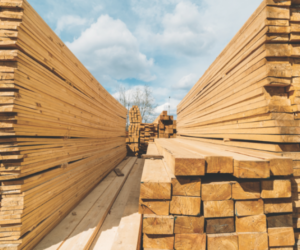
American & Canadian Softwood